Tag Archives: history

Daughter of Egypt by Marie Benedict- A Review

Standard

Thanks to NetGalley and the publisher for an advance copy of this book for review.

Marie Benedict has done it again. She’s written a well-researched book with dual timelines and both historical eras are realistically and accurately portrayed.

The two protagonists are the daughter of an earl and the daughter of a pharaoh who moves from princess to queen to pharaoh herself. Both are real historical characters with the daughter of the earl being one of the first people into the tomb of King Tut.

The Earl of Caernarvon was deep into Egyptology during his lifetime and collected many artifacts and participated in digs every year for a long while. He was the patron of Howard Carter, archeologist and being in the home with these two men, the earl’s daughter, Lady Evelyn, called Eve by the family, became fascinated with Egypt as well. She was very interested in the female pharaoh, Hatshepsut and dreamed of finding her tomb and uncovering why almost all of the history of this pharaoh had been wiped out.

Hatshepsut herself was a strong woman ahead of her time. Born the daughter of Thutmose I, she was the God’s Wife of Amun. When her father died, she married his heir and her half-brother, Thutmose II and ruled with him as queen. When he died in his turn, she was regent for his infant heir, Thutmose III. Eventually, she ruled with him. She dressed as a male pharaoh and became a pharaoh herself in this co-ruling era. When Thutmose III’s son became pharaoh in his own turn, Amenhotep II tried to erase Hatshepsut from history by destroying her monuments and statues. He ascribed the trade routes, buildings, and other advances she made in her reign to other pharaohs.

The novelization of these two true historical figures is very well done and humanizes the female pharaoh in a wonderful way. I admit I didn’t know much about her, if anything, but I found myself fascinated by her as written in this book.

Both women faced obstacles as females in their worlds and each were strong and fought for what they wanted even when they had to disguise their strong spines behind a gentle exterior.

This was a great set of two stories showing how women in history were able to find fulfillment despite the odds against a woman in their respective time periods.

A bit of romance was sprinkled in for the Lady Eve as well as Queen Hatshepsut.

This is a great book with a lot of interesting history along with compelling stories. It moves well and isn’t dry or tedious as one might expect with the dry, dusty setting of Egypt for a lot of the book. Two enthralling stories in one with a tie to each other, not only in the history of Egypt, but in obstacles women have faced in history with finding their place in the world against strong odds.

Five stars.

Ten Incarnations of Rebellion by Vaishnavi Patel

Standard

Thank you to NetGalley and Ballentine for an ARC of this wonderful book for review.

The author took inspiration from the Ten Avatars of Vishnu and wrote this story of an alternate reality as if India didn’t gain its independence back in 1947. The beginning of the story was set in the 1960s and we follow the main character and her allies for a number of years.

This non-independence for India in the 1940s made for interesting reading in a couple of ways. One, the characters who were front and center were normal young women who stepped up to fight for freedom from their oppressors. The author didn’t spare any detail on just how cruel an occupying force can be on the citizens of the country they are subjugating. Some of the scenes were brutal and heart-wrenching.

Most of the young men of the fictionalized town in the story were sent off to fight in a war that they weren’t responsible for making. They were basically the bodies needed to engage the enemy and had no choice as they were drafted.

The women of the town stepped up even more once the men were gone and waged their own war against the government occupation.

One of the things I enjoyed a lot about the story was learning more about the Ten Avatars of Vishnu. The author was very skillful in how she wove them into each of the chapters of the book. The action in the chapters were each tied to one of the incarnations and each chapter ended with a tale of a certain avatar. There were ten chapters representing the ten avatars. The tie in stories of Vishnu added so much flavor to the story. A very clever way to tell the tale. Each of them taught lessons that we can all learn from such as compassion, courage, and justice. I especially enjoyed that the main character’s name was tied so closely to one of the avatars. Again, very clever.

I admit I didn’t know much about all the avatars of Vishnu when I started reading and this book really taught me about them in a way that was easy to read and comprehend. I found myself doing research to refine what I was learning in the book. I love learning about the culture of India and find myself reading a number of fiction tales set in that region as they are interesting and enlightening. This one gets five stars from me for the adventure, alternate history with women at the forefront and for the lessons learned about the Hindu religion.

BLURB:

Kalki Divekar grows up a daughter of Kingston—a city the British built on the ashes of Bombay. The older generation, including her father, have been lost to the brutal hunt for rebels. Young men are drafted to fight wars they will never return from. And the people of her city are more interested in fighting each other than facing their true oppressors.

When tragedy strikes close to home, Kalki and her group of friends begin to play a dangerous game, obtaining jobs working for the British while secretly planning to destroy the empire from the inside out. They found Kingston’s new independence movement, knowing one wrong move means certain death. Facing threats from all quarters, Kalki must decide whether it’s more important to be a hero or to survive.

Told as ten moments from Kalki’s life that mirror the Dashavatara, the ten avatars of Vishnu, Ten Incarnations of Rebellion is a sweeping, deeply felt speculative novel of empowerment, friendship, self-determination, and the true meaning of freedom.

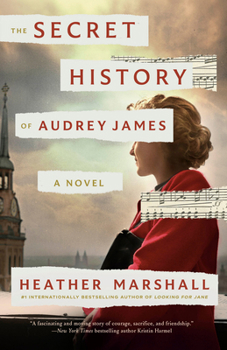
The Secret History of Audrey James by Heather Marshall

Standard

I have been remiss in posting reviews lately. No excuses, just madness in my day job. I wrote a few this weekend, so I am trying to do better.

This was an excellent book. I very much enjoyed it. There are two distinct story lines with two heroines, Audrey and Kate. The stories intersect when the two characters meet at a large estate house that has been turned into a boutique hotel.

Audrey was an English young woman who was living in Berlin in the 1930s. Her mother had been German and her father was English. Her mother passed away when Audrey was young and she spent a lot of time with the neighbor girl where she lived. When her father returned to England, Audrey stayed in Berlin with the Jewish family across the street. The daughter of the house was her best friend. Audrey was a gifted pianist studying her craft and stayed to keep at her studies.  

Kate is a young woman in the early part of the 21st century. Her marriage and job ended and she had nowhere to go as the lease was up on the place she and her husband rented while married. Her parents had passed away in a car accident and she was going to be all on her own. She was lucky enough to land a job at the boutique hotel that came with a place for her to live.

The two ladies meet and, after some initial animosity, they form a friendship over a period of time. Slowly, both of their stories come to light.

Audrey was in the wrong place at the wrong time. The Nazi party took over Berlin and the Jewish family she lived with had some harrowing times. Audrey refused to abandon them and her own life thereby became fraught with danger.

Kate was also in the wrong place at the wrong time and had her own life changing moments.

Without giving away any spoilers, I have to say the bravery and heroism of Audrey was amazing to read as her story unfolded. The time period she lived in held many dark days and she withstood a lot.

Kate’s story was not as full of life or death circumstances, but she had a rough go at life as well.

How both of these ladies persevered and overcame makes for a great read. This one is high on my list of favorites. I read a lot of stories set in Audrey’s early life time frame and this one ranks high on intrigue and a compelling story line. 5 stars.

BLURB:

Northern England, 2010. After a tragic accident upends her life, Kate Mercer leaves London to work at an old guest house near the Scottish border, where she hopes to find a fresh start and heal from her loss. When she arrives, she begins to unravel the truth about her past, but discovers that the mysterious elderly proprietor is harboring secrets of her own .

Berlin, 1938. Audrey James is weeks away from graduating from a prestigious music school in Berlin, where she’s been living with her best friend, Ilse Kaplan. As war looms, Ilse’s family disappears and high-ranking Nazi officers confiscate the house. In desperation, Audrey becomes their housekeeper while Ilse is forced into hiding in the attic. When a shocking turn of events embroils Audrey in the anti-Hitler movement, she must decide what matters most: protecting those she loves, or sacrificing everything for the greater good.

Inspired by true stories of courageous women and the German resistance during World War II, The Secret History of Audrey James is a captivating novel about the unbreakable bonds of friendship, the sacrifices we make for those we love, and the healing that comes from human connection.

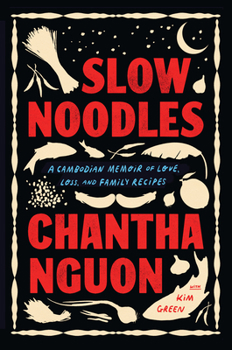
Review -Slow Noodles by Chantha Nguon (with Kim Green)

Standard

This book is a gem of a recipe book/memoir but more importantly, it’s a tale of survival, grit, and integrity. Chantha is from Cambodia. She was the child of a middle class family whose father owned an auto shop and whose mother was a housewife who was a hard worker and an excellent cook. Chantha lived a blessed life until she was nine. She was the youngest child and soft by her own admission. She attended Catholic school and spoke French. Her older sister also worked in the home and took care of the family alongside her mother.

Sadly, when Chantha was nine, horrible changes came to Cambodia with the rise of Pol Pot and the Khmer Rouge in the 1970s. Her whole life was turned upside down. For many years. Decades even.

She lost her father to a stomach ailment. The family fled to Saigon and lived there for a while. Some went right away and some delayed their trip for a while, until what was left of the family was reunited. Eventually, things fell apart in Saigon as they had in Cambodia. This area of the world was quite volatile in that decade and Chantha was caught in the middle of it.  When Saigon became unsafe, the wandering years began for Chantha.

This memoir is heartbreaking in many ways but is also a tale of one woman’s resilience and how she found her way to success and a happy life. She made harrowing escapes from some situations and almost starved to death on many occasions. But through it all, she kept hope in her heart for the most part—She did have a few moments of despair, but soldiered on. She also made her own way on the world from the pampered young daughter who thought she had no skills to the tough woman who worked as a cook in a brothel, worked as a suture sewer in a refugee camp and worked other occupations to keep herself and her companion alive. She also studied English and worked for Doctors without Borders to help bring relief to the people around her.

In each chapter there are recipes she either recalled from her mother and sister or she created herself with the ingredients to hand in the hard times.

Also in the book she shows the reader the sense of humor she kept throughout her life in some “recipes” that are more like humorous comments about life and her experiences.

Overall, this book is sometimes hard to read due to the privations this lady endured, but it is ultimately a story of one woman’s ability to hold strong and make her way in the world when she was left all on her own by the vagaries of fate.

By the time the reader gets to the end, one can’t help but be proud of this lady and all she has accomplished in life. And the recipes are well worth the price of the book. This is truly a great read that makes the reader think about how much people can endure and still come out on the other side as a whole and fulfilled person.

BLURB:

Take a well-fed nine-year-old with a big family and a fancy education. Fold in 2 revolutions, 2 civil wars, and 1 wholesale extermination. Subtract a reliable source of food, life savings, and family members, until all are gone. Shave down childhood dreams for approximately two decades, until only subsistence remains. In Slow Noodles, Chantha Nguon recounts her life as a Cambodian refugee who loses everything and everyone–her home, her family, her country–all but the remembered tastes and aromas of her mother’s kitchen. She summons the quiet rhythms of 1960s Battambang, her provincial hometown, before the dictator Pol Pot tore her country apart and killed more than a million Cambodians, many of them ethnic Vietnamese like Nguon and her family. Then, as an immigrant in Saigon, Nguon loses her mother, brothers, and sister and eventually flees to a refugee camp in Thailand. For two decades in exile, she survives by cooking in a brothel, serving drinks in a nightclub, making and selling street food, becoming a suture nurse, and weaving silk. Nguon’s irrepressible spirit and determination come through in this lyrical memoir that includes more than twenty family recipes such as sour chicken-lime soup, green papaya pickles, and p t de foie, as well as Khmer curries, stir-fries, and handmade b nh canh noodles. Through it all, re-creating the dishes from her childhood becomes an act of resistance, of reclaiming her place in the world, of upholding the values the Khmer Rouge sought to destroy, and of honoring the memory of her beloved mother, whose “slow noodles” approach to healing and cooking prioritized time and care over expediency. Slow Noodles is an inspiring testament to the power of food to keep alive a refugee’s connection to her past and spark hope for a beautiful life.

London Tales by Tim Walker

Standard

London Tales is a collection of short stories through time that all have a central London theme. There are a range of styles and some are more snippets of action rather than full tales.

I enjoyed the first few stories and I particularly liked the third one about Wat Tyler because it was told from the point of view of the peasants as well as the lords.

The story of Holly and the girl who fell through the ice in 1814  was fun to read during an ice cold day in my town. It made me glad to have heat and warm socks! 

I thought that the build up to the story set during the London Blitz was good, but the ending left me a little disappointed.

There are several other stories in this collection but they were less appealing to me and overall the book was okay, but not as good as I had hoped.

3 Stars

Every Time We Say Goodbye by Natalie Jenner- Review

Standard

This is a follow up book from Bloomsbury Girls which I read and reviewed for Rosie’s Book Review team. I appreciate St. Martin’s Press and NetGalley for providing an ARC copy of this book for me to read and review.

The story is set in the 1950s and is the continuation of the life of one of the women who worked at the bookstore in Bloomsbury, London. Vivien, in addition to working in the store, is also a playwright and chose to leave for Italy for a period of time when her success as a playwright was called into question. She took a job working at a film studio in Rome and worked on rewriting some of the screenplays being filmed there. Rome is still recovering from WWII and all the various issues that time period caused in Italy.

While there, she has to deal with the censorship of the Vatican as they have full control of what is acceptable or not in what film audiences are allowed to see.

Vivien also meets some interesting people and forms friendships with them. As well, she forms a romantic entanglement with an older man.

The story is richly layered with individual characters who are uniquely drawn and have multi-faceted personalities.

Vivien is a character we grew to admire in Bloomsbury Girls and this book finds this reader still rooting for her and hoping she gets resolution of a matter that has haunted her since the war. One of the young men she meets while working at the studio also has an interesting story line about events that happened to him during the war. Both of them were characters this reader grew attached to and hoped for the best outcome.

The author is very talented and the prose is beautifully written. The flow of the story is well done as well. This book does not have to be read after Bloomsbury Girls as the story is complete without it being necessary to know the events of the other book. Some of the characters are recurring, but it’s not vital to know those back stories. I do love how real life famous people are woven into the tale. Sophia Loren and Ava Gardner even make appearances. Such fun to addition to the story.

A lovely read.

South of Sepharad- A Review

Standard

This book will be released on February 20, 2024- Mark that date on your calendar as you are going to want this one. Many thanks to History Through Fiction for the pre-release copy in exchange for an unbiased review.

When most of us initially think of 1492 and Queen Isabella and King Ferdinand of Spain, we think of Christopher Columbus and his journey to the new world (which is a whole other problematic tale). We might also think about their daughter Katherine of Aragon who married two Tudor princes. What we might not think about is the edict this king and queen sent out in 1492 to require all the Jewish citizens of Spain to leave the country or convert to Catholicism. Under penalty of death.

The story of Vidal and his family, South of Sepharad, by Eric Z. Weintraub, takes us past these better known happenings affecting Spain in 1492 to something sinister and evil. The expulsion of a whole population of people from the country of Spain.

I had heard of the horror of the Inquisition, of course, and seen films and read other books about it. This story from Mr. Weintraub was so well-written and had characters so vividly drawn that the absolutely horrific events were brought home in a way that, while hard to read, made the journey of these Jewish people who had to leave with what few possession they could haul on a wagon really hit hard. They didn’t do anything wrong to warrant expulsion except practice their religion.

I’ve always been shocked and saddened at the number of deaths and amount of torture inflicted on others in the name of God. And this story didn’t shy away from the Inquisition and what those so-called holy men were capable of. If they wanted you dead, they would plant words in the mouths of the person they were interrogating. They would also twist what the person said to match their own agenda.

This book hit all the harrowing parts of the journey out of Spain for the Jewish people. From having to sell homes that had been in their families for generations, and selling their possessions and heirlooms, to leaving people behind, and the way their feet hurt and boots became full of holes on that journey. It also covered the food shortages and lack of water. I felt as if I was on the journey with them.

Even the few who stayed behind and converted to Catholicism weren’t really safe as they were always suspected of converting for purposes that weren’t sincere. And it was a forced conversion so how sincere could it have been? To betray the religion of your people must have been very difficult to decide to do. In short, these poor people were in a no win situation.

This book is an important one for us to read in these times. This horror of disliking or even hating people of other religions seems to have never gone away, but it seems to be coming back to the forefront of being acceptable to treat those who do not share certain beliefs as less than human.

The story in this book is obviously fiction and it’s well told. The author has a beautiful way with prose. Even though it’s hard to read in places, it’s an important and captivating tale (with moments of heartbreak) of one family’s life and the changes they are forced to make by a king and queen who were absolutely vile human beings.

The author did meticulous research and immersed us in the world of Spain in 1492. He gives some excellent resources at the end as well. The cover is so vivid and attractive too.

I give this one five stars

Burke and the Lines of Torres Vedras by Tom Williams

Standard

Another great spy story from Tom Williams starring his spy, Burke and the sergeant, William, who helps him in his missions. I had not heard of the fortifications at Torres Vedras before picking up this book.

I love this series as it combines history with intrigue and exciting stories. This one was no exception. It was more of a slow burn than a minute by minute danger zone, but was very enjoyable. Our hero is tasked with rooting out spies in the Portugal city of Lisbon and the surrounding area. It wasn’t going to be quick and it wasn’t going to be easy. The pacing was slower than the last book, but as a fan of the series, I can see how that was necessary for the plot. While every minute of a spy’s day is dangerous due to the nature of the work, the actual tedium of doing the groundwork to root out the spy being sought might not be moments of breathless excitement.

Poor William caught the brunt of the issues in this adventure. I felt sorry for him. Poor guy.  But as usual, he didn’t let it bring him down.

The respect Burke shows to one of the adversaries near the end of the book was intriguing and admirable even though I was a bit surprised. He’s a good man and I love the way the author has taken a real historical figure and made him someone we in this modern era can relate to even if we sometimes can’t relate to the tactics that were used in those days in the Army and the art of war.

In short, this was another success and I recommend it for those who enjoy historical fiction with a lot of realistic scenes of danger and violence as each side of a war try to win. Man’s inhumanity to man is definitely on display in this one. Five stars.

A Noble Cunning: the Countess and the Tower by Patricia Bernstein

Standard

This novel is based on and inspired by the real life bravery of a Scottish countess in 1715. Her name was Winifred Maxwell, Countess of Nithsdale. She saved her husband from certain death by smuggling him out of the Tower.

The character in the book is Bethan Glentaggert, Countess of Clarencefield. When she was a child, her family fled to France with King James II (A Stuart king) when William of Orange and Queen Mary (Stuarts) took the throne. Her family was Catholic and lived in exile for many years. She married at age 27 and moved to Scotland with her husband. They lived happily for a while, having three children, but eventually, when the first Jacobite rebellion (to restore James to the throne) occurred, her husband joined in, taking many of his tenants with him into battle.

With the rebels’ loss at Preston, her husband was taken prisoner and held in the Tower of London awaiting trial. The countess sent her children to safety and traveled to London to try to save her husband.

We, as readers, make the journey with her. Through a terrible winter storm. One of the worst in years. The author did an excellent job with the descriptions and the travails of the trip. A lesser woman might have given up. The countess had to leave her companion at one point and continue on her own. As a modern day woman, I can’t even imagine how scary that was—first, with the weather and then when alone, worrying about cutthroats and robbers. A woman alone was very vulnerable, but she persevered.

Once she arrives in London, she visits her husband in the Tower and gets him legal counsel to try to fight the treason charges. She also tries to plead to the king to let him go free. She hatches a back-up plan to try to save him if the legal case doesn’t go well.

The book was full of historical details and the author did an excellent job of painting the reader a picture of the era. It was as if we were there with the intrepid countess in the snow and in the Tower. The feeling of fear she felt for her husband and what would happen to him read very real.

The only disappointment I had with the book was the ending. I wanted more information about what happened when the countess joined her husband at the culmination of her brave and daring plan. I guess I’ll have to read one of the books in the bibliography at the end of the novel to learn more about the real life lady who took on the British establishment.

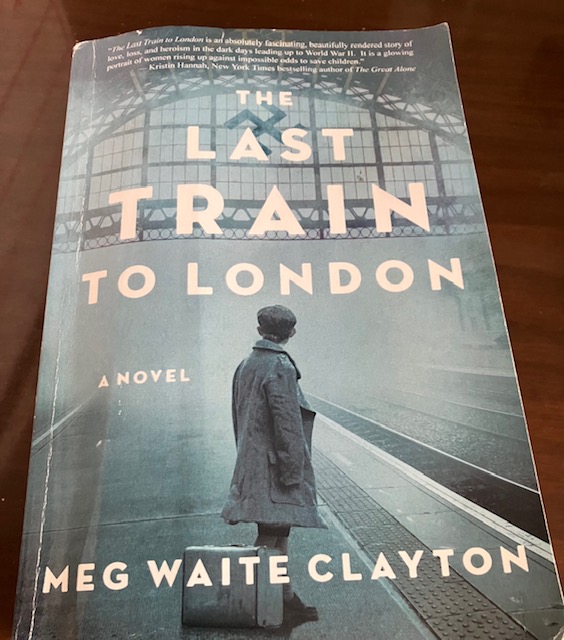
Review – Last Train to London by Meg Waite Clayton

Standard

This is a fictionalized story based on the very real kindertransport trains and ferries taking Jewish children out of Nazi Europe. The real woman who convinced Eichmann to allow the first 600 children to be transported to London, when England agreed to provide visas for them, was named Geertruida Wijsmuller. She saved a large number of Jewish children’s lives, first by taking two and three, and sometimes as many as ten, out of Germany and into the Netherlands. She started doing this in the mid-1930s. The situation became more urgent after Hitler invaded Austria. Many countries closed their borders and refused to allow Jewish people entry visas. Tante Truus, as she had the children call her, worked with some highly placed people in England to pressure their parliament to allow children to be evacuated and held in two summer camps until foster families could take them in. After the war, she was granted Righteous Among the Nations status.

The story in this book centers on two families. One a wealthy Jewish chocolatier who has a wife suffering from cancer. They have two sons, Stephan and Walter. The other, a barber, a Christian grandfather who has a widowed daughter-in-law with two daughters. One is Zofie-Helene and the other Johanna. Their mother is a journalist who is very outspoken against the Nazis.

The story starts with both families living their normal lives and Zofie and Stephan becoming close friends. She’s mathematically gifted and he’s interested in being a playwright.

The chapters alternate between their stories and the story of Tante Truus and her rescues of small groups of children and the dangers she faces in that endeavor.

With Truus in the Netherlands and the others in Vienna, I wondered in the early parts of the book how she was going to help them being as they are quite a ways apart.

When Germany annexes Austria with not so much as a shot fired and seemingly overnight, Stephan’s family’s life undergoes a massive change. His father is taken to a camp and he goes into hiding as he is of an age where the Nazis want to inter him in a camp as well. His brother is only five and, at this time, they were not taking children that young to the camps.

Zofie’s mother, a Christian, eventually gets taken by the Nazis due to her unwelcome stories pointing out their conduct which she won’t stop writing even though she is pressured to do so. The two girls are left with their grandfather.

The story unfolded at a good pace. Some of the parts were very hard to read. The author depicted the utterly senseless cruelty of the Nazis and their adherents very well. It always amazes me how terribly awful these people could be to other people. And how the population turned on people who had been their friends and fellow citizens just days prior.

The author also did a good job showing the fear and terror of the ordinary citizen and why so many didn’t speak up to try to stop the atrocities they witnessed. A great part of the population was cowed and if they spoke up, they would be punished severely as well. Some of them tortured and murdered merely for voicing an opinion—or for nothing at all, even an imagined slight.

It was a harrowing read but one I recommend for several reasons. One, the story of the main characters in Vienna seems to be a reflection of what a lot of families went through during this time. Two, the story of Geertruida Wijsmuller is a story of how one person can make a massive difference in the lives of so many. One voice, one brave soul, she saved so many and gave them a chance at life and that is amazing. And third, with the seeming resurgence of some of the awful ideas the Nazi’s had, this is an important read. We must never, ever, let these things happen again and the author of this book makes what happened to Jewish people, as well as anyone who disagreed with the Nazi ideals in that time, all very real and relatable with the characters she created.

This one is well worth a read.