Thanks to NetGalley and the publisher for an advance copy of this book for review.
Marie Benedict has done it again. She’s written a well-researched book with dual timelines and both historical eras are realistically and accurately portrayed.
The two protagonists are the daughter of an earl and the daughter of a pharaoh who moves from princess to queen to pharaoh herself. Both are real historical characters with the daughter of the earl being one of the first people into the tomb of King Tut.
The Earl of Caernarvon was deep into Egyptology during his lifetime and collected many artifacts and participated in digs every year for a long while. He was the patron of Howard Carter, archeologist and being in the home with these two men, the earl’s daughter, Lady Evelyn, called Eve by the family, became fascinated with Egypt as well. She was very interested in the female pharaoh, Hatshepsut and dreamed of finding her tomb and uncovering why almost all of the history of this pharaoh had been wiped out.
Hatshepsut herself was a strong woman ahead of her time. Born the daughter of Thutmose I, she was the God’s Wife of Amun. When her father died, she married his heir and her half-brother, Thutmose II and ruled with him as queen. When he died in his turn, she was regent for his infant heir, Thutmose III. Eventually, she ruled with him. She dressed as a male pharaoh and became a pharaoh herself in this co-ruling era. When Thutmose III’s son became pharaoh in his own turn, Amenhotep II tried to erase Hatshepsut from history by destroying her monuments and statues. He ascribed the trade routes, buildings, and other advances she made in her reign to other pharaohs.
The novelization of these two true historical figures is very well done and humanizes the female pharaoh in a wonderful way. I admit I didn’t know much about her, if anything, but I found myself fascinated by her as written in this book.
Both women faced obstacles as females in their worlds and each were strong and fought for what they wanted even when they had to disguise their strong spines behind a gentle exterior.
This was a great set of two stories showing how women in history were able to find fulfillment despite the odds against a woman in their respective time periods.
A bit of romance was sprinkled in for the Lady Eve as well as Queen Hatshepsut.
This is a great book with a lot of interesting history along with compelling stories. It moves well and isn’t dry or tedious as one might expect with the dry, dusty setting of Egypt for a lot of the book. Two enthralling stories in one with a tie to each other, not only in the history of Egypt, but in obstacles women have faced in history with finding their place in the world against strong odds.
Thank you to NetGalley and Ballentine for an ARC of this wonderful book for review.
The author took inspiration from the Ten Avatars of Vishnu and wrote this story of an alternate reality as if India didn’t gain its independence back in 1947. The beginning of the story was set in the 1960s and we follow the main character and her allies for a number of years.
This non-independence for India in the 1940s made for interesting reading in a couple of ways. One, the characters who were front and center were normal young women who stepped up to fight for freedom from their oppressors. The author didn’t spare any detail on just how cruel an occupying force can be on the citizens of the country they are subjugating. Some of the scenes were brutal and heart-wrenching.
Most of the young men of the fictionalized town in the story were sent off to fight in a war that they weren’t responsible for making. They were basically the bodies needed to engage the enemy and had no choice as they were drafted.
The women of the town stepped up even more once the men were gone and waged their own war against the government occupation.
One of the things I enjoyed a lot about the story was learning more about the Ten Avatars of Vishnu. The author was very skillful in how she wove them into each of the chapters of the book. The action in the chapters were each tied to one of the incarnations and each chapter ended with a tale of a certain avatar. There were ten chapters representing the ten avatars. The tie in stories of Vishnu added so much flavor to the story. A very clever way to tell the tale. Each of them taught lessons that we can all learn from such as compassion, courage, and justice. I especially enjoyed that the main character’s name was tied so closely to one of the avatars. Again, very clever.
I admit I didn’t know much about all the avatars of Vishnu when I started reading and this book really taught me about them in a way that was easy to read and comprehend. I found myself doing research to refine what I was learning in the book. I love learning about the culture of India and find myself reading a number of fiction tales set in that region as they are interesting and enlightening. This one gets five stars from me for the adventure, alternate history with women at the forefront and for the lessons learned about the Hindu religion.
BLURB:
Kalki Divekar grows up a daughter of Kingston—a city the British built on the ashes of Bombay. The older generation, including her father, have been lost to the brutal hunt for rebels. Young men are drafted to fight wars they will never return from. And the people of her city are more interested in fighting each other than facing their true oppressors.
When tragedy strikes close to home, Kalki and her group of friends begin to play a dangerous game, obtaining jobs working for the British while secretly planning to destroy the empire from the inside out. They found Kingston’s new independence movement, knowing one wrong move means certain death. Facing threats from all quarters, Kalki must decide whether it’s more important to be a hero or to survive.
Told as ten moments from Kalki’s life that mirror the Dashavatara, the ten avatars of Vishnu, Ten Incarnations of Rebellion is a sweeping, deeply felt speculative novel of empowerment, friendship, self-determination, and the true meaning of freedom.
I have been remiss in posting reviews lately. No excuses, just madness in my day job. I wrote a few this weekend, so I am trying to do better.
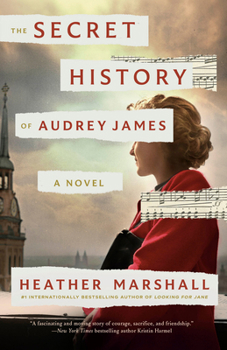
This was an excellent book. I very much enjoyed it. There are two distinct story lines with two heroines, Audrey and Kate. The stories intersect when the two characters meet at a large estate house that has been turned into a boutique hotel.
Audrey was an English young woman who was living in Berlin in the 1930s. Her mother had been German and her father was English. Her mother passed away when Audrey was young and she spent a lot of time with the neighbor girl where she lived. When her father returned to England, Audrey stayed in Berlin with the Jewish family across the street. The daughter of the house was her best friend. Audrey was a gifted pianist studying her craft and stayed to keep at her studies.
Kate is a young woman in the early part of the 21st century. Her marriage and job ended and she had nowhere to go as the lease was up on the place she and her husband rented while married. Her parents had passed away in a car accident and she was going to be all on her own. She was lucky enough to land a job at the boutique hotel that came with a place for her to live.
The two ladies meet and, after some initial animosity, they form a friendship over a period of time. Slowly, both of their stories come to light.
Audrey was in the wrong place at the wrong time. The Nazi party took over Berlin and the Jewish family she lived with had some harrowing times. Audrey refused to abandon them and her own life thereby became fraught with danger.
Kate was also in the wrong place at the wrong time and had her own life changing moments.
Without giving away any spoilers, I have to say the bravery and heroism of Audrey was amazing to read as her story unfolded. The time period she lived in held many dark days and she withstood a lot.
Kate’s story was not as full of life or death circumstances, but she had a rough go at life as well.
How both of these ladies persevered and overcame makes for a great read. This one is high on my list of favorites. I read a lot of stories set in Audrey’s early life time frame and this one ranks high on intrigue and a compelling story line. 5 stars.
BLURB:
Northern England, 2010. After a tragic accident upends her life, Kate Mercer leaves London to work at an old guest house near the Scottish border, where she hopes to find a fresh start and heal from her loss. When she arrives, she begins to unravel the truth about her past, but discovers that the mysterious elderly proprietor is harboring secrets of her own .
Berlin, 1938. Audrey James is weeks away from graduating from a prestigious music school in Berlin, where she’s been living with her best friend, Ilse Kaplan. As war looms, Ilse’s family disappears and high-ranking Nazi officers confiscate the house. In desperation, Audrey becomes their housekeeper while Ilse is forced into hiding in the attic. When a shocking turn of events embroils Audrey in the anti-Hitler movement, she must decide what matters most: protecting those she loves, or sacrificing everything for the greater good.
Inspired by true stories of courageous women and the German resistance during World War II, The Secret History of Audrey James is a captivating novel about the unbreakable bonds of friendship, the sacrifices we make for those we love, and the healing that comes from human connection.
I picked this book up way back in December because I was intrigued by the premise, but I kept passing it up to read other things. When I finally picked it up a couple of weeks ago to dive into it, I was surprised to find that I had actually read another book by the same author that I had enjoyed immensely. The other one was called Code Name: Helene and was also fiction based on a true person (and I thought I had a review of it and can’t find it, but I put the blurb at the end here as I highly recommend it too.
This book, The Frozen River, was based on Martha Ballard, a midwife in the time of the American Revolution and the years following it. Ms. Lawhon came upon her story and the actual lady’s diaries were woven into the premise of the story. Entries were used in each of the chapters which I found to be engrossing. The story is set in 1789.
Ms. Lawton has a gift for beautiful prose. Her work sings. She just makes the characters come alive.
Our heroine midwife has a great marriage and a number of children. She has also experienced the loss of children herself which makes her a compassionate midwife to the women of the community she serves.
The book starts with the discovery of a dead man frozen in the river. The man had previously been accused of rape and was found with bruises on him and marks on his neck. There had also been an altercation between him and others at a dance the evening he died.
Martha Ballard thinks the man was murdered. The new local doctor, who hates the heroine as he thinks she perceives herself as his equal, disagrees with her and says it was an accident. The body is placed in a barn as it is too cold to bury him while the ground is frozen.
There is no shortage of suspects who didn’t like the dead man. The book has our heroine trying to not only solve this mystery, but to try to get justice for the woman who was raped and who is now carrying the child of her rapist.
The story is fraught with tension as well as woven with many passages showing the love and strength of this woman with her family as well as the ladies she helps to bring life into the world.
As in Code Name: Helene, I found myself liking this character very much and rooting for her all the way.
Lots of intrigue both in the story of the rape and murder, but also in the flashbacks to the past of the main character.
Grab a copy of this one if you like family-oriented stories with a dash of mystery and solving crimes. This one is intricate and compelling with a strong heroine who is ready to stand up for women in an age where few did.
BLURB:
Maine, 1789: As a midwife in the town of Hallowell, Martha Ballard knows how to keep a secret. Her neighbors respect her not only for her medical expertise and calm under pressure, but for her discretion in a community governed by rigid Puritan values. So when a man is found under the ice in the Kennebec river, Martha is the first person called to examine the body.
The dead man is Joshua Burgess, recently accused, along with the town judge, Joseph North, of raping the preacher’s wife, Rebecca Foster. The case is set to go to trial in the coming months and Hallowell is churning with rumors. Martha, having tended to Rebecca’s wounds in the aftermath, is both a witness and a confidant of Rebecca’s, and while she feels certain she knows the truth of the night of the assault, she suspects there is more to the murder than meets the eye.
For years, Martha has recounted her every day in a leather-bound journal: deaths and births, the weather, town events, her patients and their treatments. As whispers and prejudices threaten to overflow into something bloodier, and North becomes more desperate to clear his name, Martha’s diary becomes the center of a mystery that risks tearing both her family and her town apart.
In The Frozen River, Ariel Lawhon brings to life a brave and compassionate unsung heroine of early American history, who refused to accept anything less than justice on behalf of women no one else would protect.
BLURB for Code Name: Helene
BASED ON THE THRILLING REAL-LIFE STORY OF SOCIALITE SPY NANCY WAKE, comes the newest feat of historical fiction from the New York Times bestselling author of I Was Anastasia, featuring the astonishing woman who killed a Nazi with her bare hands and went on to become one of the most decorated women in WWII.
Told in interweaving timelines organized around the four code names Nancy used during the war, Code Name Hélène is a spellbinding and moving story of enduring love, remarkable sacrifice and unfaltering resolve that chronicles the true exploits of a woman who deserves to be a household name. It is 1936 and Nancy Wake is an intrepid Australian expat living in Paris who has bluffed her way into a reporting job for Hearst newspaper when she meets the wealthy French industrialist Henri Fiocca. No sooner does Henri sweep Nancy off her feet and convince her to become Mrs. Fiocca than the Germans invade France and she takes yet another name: a code name. As LUCIENNE CARLIER Nancy smuggles people and documents across the border. Her success and her remarkable ability to evade capture earns her the nickname THE WHITE MOUSE from the Gestapo. With a five-million-franc bounty on her head, Nancy is forced to escape France and leave Henri behind. When she enters training with the Special Operations Executives in Britain, her new comrades are instructed to call her HÉLÈNE. And finally, with mission in hand, Nancy is airdropped back into France as the deadly MADAM ANDRÉE, where she claims her place as one of the most powerful leaders in the French Resistance, armed with a ferocious wit, her signature red lipstick, and the ability to summon weapons straight from the Allied Forces. But no one can protect Nancy if the enemy finds out these four women are one and the same, and the closer to liberation France gets, the more exposed she–and the people she loves–become.
I read this one back in March of this year. It was an ARC from NetGalley and I thank them for the opportunity to read and review this lovely book.
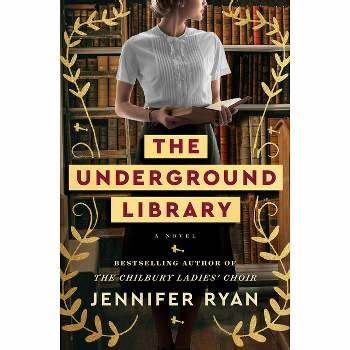
The story was set during the Blitz in London and follows the lives of three young ladies. One, Julie, is a new under-librarian at Bethnel Green Library. She has moved to London from her small village and has big dreams about her work at the library. She is met with resistance from the head of the library, a man. She is also boarding with a woman whose husband is serving in the war. The other tenant of the house is the man her mother wanted her to marry, but she thought he was too much of a ladies man and flirt to be taken seriously as a husband,
The second girl, Katie, is working at the library until she leaves for university. Her family is very conscious of reputation even though her father is a bit of a cad. Her fiance is at the front and she gets devastating news about him. And she is hiding a big secret from everyone.
The third girl, Sofie, a Jewish refugee, came to London to escape the Nazis. She is on a domestic service visa with a horrible man as her sponsor/employer. She misses her family and is worried about their safety. She visits the library down the street in order to find some relief from the hard work and the worry about her kin.
A Nazi bomb hits the library, damaging some books, but many survive. Katie moves some of the salvaged books to the underground station and starts reading to people who are sheltered there. Eventually, she convinces the board of the library to allow the lending to continue from that location.
Many events occur with the lives of these three women, including issues with family, a theft, a trip to the Isle of Man, and some heartbreaking scenes with Katie.
A great book, written in a simple style that would be easy for teens to read. Some of the subject matter is sensitive, but there is nothing here that would take this book to the level that it isn’t appropriate for anyone over the age of fifteen. As well, it is also suitable for older readers. I enjoyed it immensely. Lots of conflict for all three protagonists and the journey of each is well done and believable.
BLURB:
When the Blitz imperils the heart of a London neighborhood, three young women must use their fighting spirit to save the community’s beloved library in this novel based on true events from the author of The Chilbury Ladies’ Choir.
When the new deputy librarian, Juliet Lansdown, finds that Bethnal Green Library isn’t the bustling hub she is expecting, she becomes determined to breathe life back into it. But can she show the men in charge that a woman is up to the task of running the library, especially when a confrontation with her past threatens to derail her?
Katie Upwood is thrilled to be working at the library, although she is only there until she heads off to university in the fall. But after the death of her beau on the front line and amid tumultuous family strife, she finds herself harboring a life-changing secret with no one to turn to for help.
Sofie Baumann, a young Jewish refugee, came to London on a domestic service visa only to find herself working as a maid for a man who treats her abominably. She escapes to the library every chance she can, finding friendship in the literary community and aid in finding her sister, who is still trying to flee occupied Europe.
When a slew of bombs destroys the library, Juliet relocates the stacks to the local Underground station where the city’s residents shelter nightly, determined to lend out stories that will keep spirits up. But tragedy after tragedy threatens to unmoor the women and sever the ties of their community. Will Juliet, Kate, and Sofie be able to overcome their own troubles to save the library? Or will the beating heart of their neighborhood be lost forever?
This is a follow up book from Bloomsbury Girls which I read and reviewed for Rosie’s Book Review team. I appreciate St. Martin’s Press and NetGalley for providing an ARC copy of this book for me to read and review.
The story is set in the 1950s and is the continuation of the life of one of the women who worked at the bookstore in Bloomsbury, London. Vivien, in addition to working in the store, is also a playwright and chose to leave for Italy for a period of time when her success as a playwright was called into question. She took a job working at a film studio in Rome and worked on rewriting some of the screenplays being filmed there. Rome is still recovering from WWII and all the various issues that time period caused in Italy.
While there, she has to deal with the censorship of the Vatican as they have full control of what is acceptable or not in what film audiences are allowed to see.
Vivien also meets some interesting people and forms friendships with them. As well, she forms a romantic entanglement with an older man.
The story is richly layered with individual characters who are uniquely drawn and have multi-faceted personalities.
Vivien is a character we grew to admire in Bloomsbury Girls and this book finds this reader still rooting for her and hoping she gets resolution of a matter that has haunted her since the war. One of the young men she meets while working at the studio also has an interesting story line about events that happened to him during the war. Both of them were characters this reader grew attached to and hoped for the best outcome.
The author is very talented and the prose is beautifully written. The flow of the story is well done as well. This book does not have to be read after Bloomsbury Girls as the story is complete without it being necessary to know the events of the other book. Some of the characters are recurring, but it’s not vital to know those back stories. I do love how real life famous people are woven into the tale. Sophia Loren and Ava Gardner even make appearances. Such fun to addition to the story.
This book will be released on February 20, 2024- Mark that date on your calendar as you are going to want this one. Many thanks to History Through Fiction for the pre-release copy in exchange for an unbiased review.
When most of us initially think of 1492 and Queen Isabella and King Ferdinand of Spain, we think of Christopher Columbus and his journey to the new world (which is a whole other problematic tale). We might also think about their daughter Katherine of Aragon who married two Tudor princes. What we might not think about is the edict this king and queen sent out in 1492 to require all the Jewish citizens of Spain to leave the country or convert to Catholicism. Under penalty of death.
The story of Vidal and his family, South of Sepharad, by Eric Z. Weintraub, takes us past these better known happenings affecting Spain in 1492 to something sinister and evil. The expulsion of a whole population of people from the country of Spain.
I had heard of the horror of the Inquisition, of course, and seen films and read other books about it. This story from Mr. Weintraub was so well-written and had characters so vividly drawn that the absolutely horrific events were brought home in a way that, while hard to read, made the journey of these Jewish people who had to leave with what few possession they could haul on a wagon really hit hard. They didn’t do anything wrong to warrant expulsion except practice their religion.
I’ve always been shocked and saddened at the number of deaths and amount of torture inflicted on others in the name of God. And this story didn’t shy away from the Inquisition and what those so-called holy men were capable of. If they wanted you dead, they would plant words in the mouths of the person they were interrogating. They would also twist what the person said to match their own agenda.
This book hit all the harrowing parts of the journey out of Spain for the Jewish people. From having to sell homes that had been in their families for generations, and selling their possessions and heirlooms, to leaving people behind, and the way their feet hurt and boots became full of holes on that journey. It also covered the food shortages and lack of water. I felt as if I was on the journey with them.
Even the few who stayed behind and converted to Catholicism weren’t really safe as they were always suspected of converting for purposes that weren’t sincere. And it was a forced conversion so how sincere could it have been? To betray the religion of your people must have been very difficult to decide to do. In short, these poor people were in a no win situation.
This book is an important one for us to read in these times. This horror of disliking or even hating people of other religions seems to have never gone away, but it seems to be coming back to the forefront of being acceptable to treat those who do not share certain beliefs as less than human.
The story in this book is obviously fiction and it’s well told. The author has a beautiful way with prose. Even though it’s hard to read in places, it’s an important and captivating tale (with moments of heartbreak) of one family’s life and the changes they are forced to make by a king and queen who were absolutely vile human beings.
The author did meticulous research and immersed us in the world of Spain in 1492. He gives some excellent resources at the end as well. The cover is so vivid and attractive too.
Another great spy story from Tom Williams starring his spy, Burke and the sergeant, William, who helps him in his missions. I had not heard of the fortifications at Torres Vedras before picking up this book.
I love this series as it combines history with intrigue and exciting stories. This one was no exception. It was more of a slow burn than a minute by minute danger zone, but was very enjoyable. Our hero is tasked with rooting out spies in the Portugal city of Lisbon and the surrounding area. It wasn’t going to be quick and it wasn’t going to be easy. The pacing was slower than the last book, but as a fan of the series, I can see how that was necessary for the plot. While every minute of a spy’s day is dangerous due to the nature of the work, the actual tedium of doing the groundwork to root out the spy being sought might not be moments of breathless excitement.
Poor William caught the brunt of the issues in this adventure. I felt sorry for him. Poor guy. But as usual, he didn’t let it bring him down.
The respect Burke shows to one of the adversaries near the end of the book was intriguing and admirable even though I was a bit surprised. He’s a good man and I love the way the author has taken a real historical figure and made him someone we in this modern era can relate to even if we sometimes can’t relate to the tactics that were used in those days in the Army and the art of war.
In short, this was another success and I recommend it for those who enjoy historical fiction with a lot of realistic scenes of danger and violence as each side of a war try to win. Man’s inhumanity to man is definitely on display in this one. Five stars.
I’ve been meaning to review these books for a while but have had a number of personal family issues that have made reviewing difficult recently.
A very long time ago, I read the first books in the Lady Julia Grey series by Deanna Raybourn and truly enjoyed them but didn’t keep going in the series. I did pick up a couple more of them as the years went on but they were in my pile to be read and I never got to them.
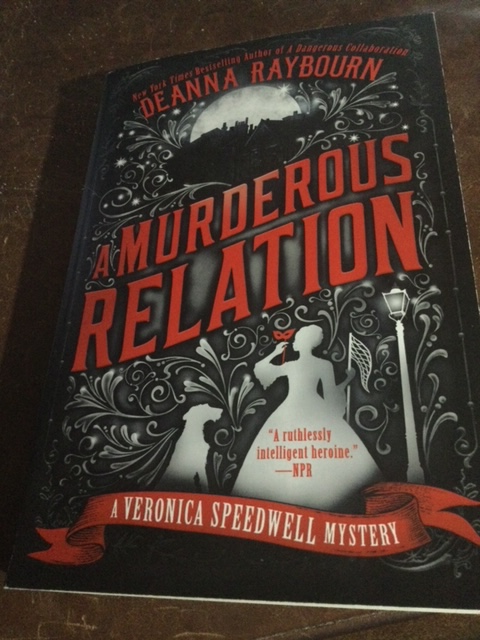
In the meantime, I picked up A Murderous Relation in paperback not too long ago and read it in January. I enjoyed the two main characters, Veronica Speedwell and Stoker. They had a great relationship and the mystery they solved was intriguing and interesting.
Reading this book made me decide to dig out the other books I had by her and I started reading Dark Road to Darjeeling. As I read the first couple of chapters, I was thrown off by the fact that Lady Julie was the daughter of an earl and had siblings with her as they traveled in India. It took me a while to catch on that this was a different heroine than the one in A Murderous Relation.
I am truly not an idiot but having recently read the Murderous book, I wasn’t thinking about those older books with Lady Julia as it had been over 10 years since I read those. The two main characters in each of the book series were so alike and spoke in the same voice that it took me a while to differentiate what series I was reading.
Lady Julia is an aristocrat and the legitimate daughter of an earl. Veronica is the illegitimate child of the Prince of Wales. Veronica is a lepidopterist involved with a man name Stoker who is a jack of all trades and enjoys taxidermy. Lady Julia is a wanna-be detective married to a detective named Brisbane who has a myriad of skills like Stoker. They are both independent-minded women (which I love) and are not cowed or intimidated by strong men.
Both men are alpha types and get frustrated with the female main characters. Both are overly protective (which is right for the era) and have similar character traits.
As I read the first chapters, I kept saying, “Wait, I thought she was illegitimate and had no real relationship with her siblings.” Eventually, it dawned on me that I was reading about different characters. I laughed and said “Duh,” as I recalled the first books I had read in the Lady Julia series.
But later on, I confess, I got confused again. There was a young boy character in the Darjeeling book who collected creatures, including butterflies. My first thought was, “With her being a lepidopterist, she will be able to relate to him well.” Another duh moment. Wrong heroine.
I understand the author’s voice is the author’s voice, but I confess, the similarities of the personalities of Lady Julia and Veronica as well as similarities with both Stoker and Brisbane, I spent way too much time mulling over who was who and what series I was reading.
I very much enjoyed both books. The setting in the Himalayas in the Darjeeling book was marvelous and the brothel scenes in the Veronica book were delightful. The plots were intricate and well-done. The flow of the stories was also well done and the pacing was great. I just have to do better as I read them in the future. 🙂
Set in 1950 in Mexico, this book appealed to me initially because the cover is so beautiful and because I’ve loved gothic tales since I was a young reader. I have to say, the book did not disappoint. It definitely lived up to the promise made by the cover. It was creepy and had just the right touch of horror.
The author is very adept at descriptions. Her moldy, genteel, neglected manor house was sufficiently sinister and so easy to picture with the atmospheric way the author detailed the wallpaper, the darkness of the place, the shadows and the crumbling textures of the various rooms. Not much electrical light in the house and the use of candles and lanterns added to the eerie atmosphere.
The inhabitants of the home were also well-drawn. The patriarch of the family the heroine came to stay with when she was concerned about her cousin was utterly horrific and macabre. The way the author conjured him and his smelly breath and scent of decay was absolutely divine (if you like creep-tastic descriptions). I could almost smell the nastiness rolling off him. It was deliciously horrifying.
One character I loved to hate was the female resident of the house—not the heroine’s cousin, but the mother of the only remotely normal person (and that’s saying a lot) in the house. This woman was awful and just completely unkind to the heroine. No talking at dinner, controlling her son, controlling the heroine’s cousin and just being an all-around hateful person. I wanted to smack her.
The story itself had traditional elements of the gothic genre as well as a lot of horror elements. It kind of reminded me of the movie Crimson Peak–at least in the descriptions of the manor house that had fallen into disrepair and neglect. Mold and mushrooms were a big theme in the story and I don’t think I’ve ever been so unsettled by mushrooms in my life. I loved it, though.
A sense of foreboding which is essential to gothic stories was seeped into every page after the first chapter or two. The dawning horror the heroine faced built in a fabulous manner and by the last few chapters, I was on edge for her and wondered how the author was going to resolve the dilemmas our heroine found herself in.
I usually figure out stories really early on, but this one had some twists and turns I didn’t see coming and I really enjoyed that. All in all, this was a great read. Not sure I want to eat any mushrooms after that, though. 🙂