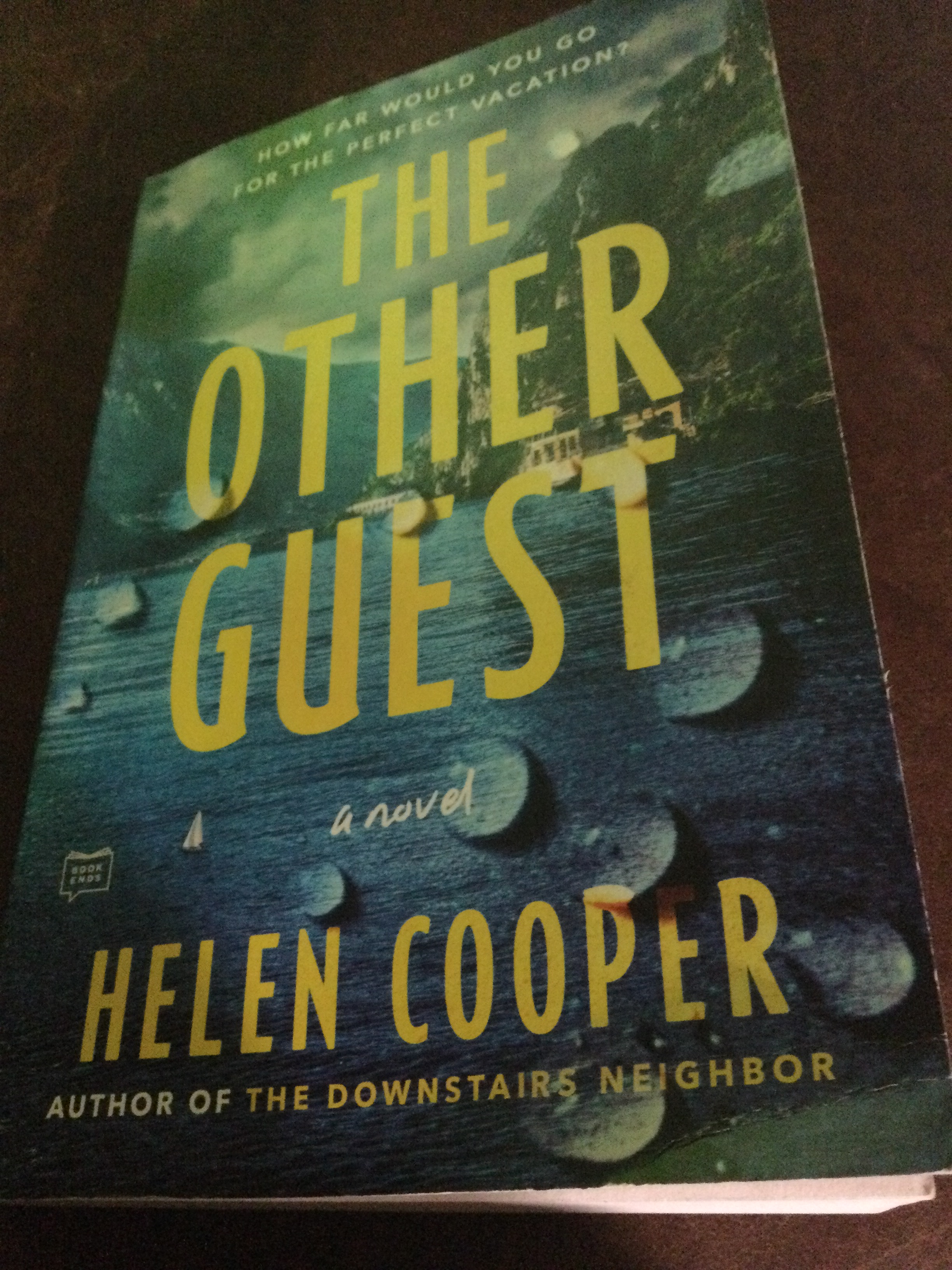
I got this book in a book swap at a book club meeting. I may not have otherwise discovered it so I’m glad the luck of the draw was with me that night.
A domestic suspense novel set partially in Italy and partially in Derby, UK. Chapters alternate between three women. Leah, Joanna, and Amy each tell their stories in turn and we root for each one.
The death of a young woman nine months before the story starts is integral to the book. A family torn apart by death, suspicion of a bartender who left Italy after the death and an aunt who wants answers mix together in Italy. A woman nursing a broken heart and beginning to recover from it in Derby is another mystery as the book opens. What she has to do with the family in Italy is one of the conundrums the reader is faced with in reading the tale. Figuring out her connection to a place far away where she’s never been is part of the initial fun of the read.
I liked the way the author alternated the story with present day Leah and Johanna and wove what they were going through separately eventually to the denouement. The flashbacks with Amy added a poignant element to the tale.
Both Joanna and Leah get into dangerous situations in the book, some due to their own making which ramped up the anxiety on their behalf. Some were due to their natural curiosity and helpful natures. Each of them acted in a way to endanger themselves on occasion. This reader enjoyed the anxiety for their safety in those scenes. The author did an excellent job crafting the suspenseful parts of the tale. The way she tied the diverse elements together was very satisfying.
I read this one in part of an evening and part of a morning. It was a quick read, yet packed with fully drawn characters, suspense and convincing action.
This novel is based on and inspired by the real life bravery of a Scottish countess in 1715. Her name was Winifred Maxwell, Countess of Nithsdale. She saved her husband from certain death by smuggling him out of the Tower.
The character in the book is Bethan Glentaggert, Countess of Clarencefield. When she was a child, her family fled to France with King James II (A Stuart king) when William of Orange and Queen Mary (Stuarts) took the throne. Her family was Catholic and lived in exile for many years. She married at age 27 and moved to Scotland with her husband. They lived happily for a while, having three children, but eventually, when the first Jacobite rebellion (to restore James to the throne) occurred, her husband joined in, taking many of his tenants with him into battle.
With the rebels’ loss at Preston, her husband was taken prisoner and held in the Tower of London awaiting trial. The countess sent her children to safety and traveled to London to try to save her husband.
We, as readers, make the journey with her. Through a terrible winter storm. One of the worst in years. The author did an excellent job with the descriptions and the travails of the trip. A lesser woman might have given up. The countess had to leave her companion at one point and continue on her own. As a modern day woman, I can’t even imagine how scary that was—first, with the weather and then when alone, worrying about cutthroats and robbers. A woman alone was very vulnerable, but she persevered.
Once she arrives in London, she visits her husband in the Tower and gets him legal counsel to try to fight the treason charges. She also tries to plead to the king to let him go free. She hatches a back-up plan to try to save him if the legal case doesn’t go well.
The book was full of historical details and the author did an excellent job of painting the reader a picture of the era. It was as if we were there with the intrepid countess in the snow and in the Tower. The feeling of fear she felt for her husband and what would happen to him read very real.
The only disappointment I had with the book was the ending. I wanted more information about what happened when the countess joined her husband at the culmination of her brave and daring plan. I guess I’ll have to read one of the books in the bibliography at the end of the novel to learn more about the real life lady who took on the British establishment.
I received this book from Kensington Books in exchange for an unbiased review.
This was a great story. I was pulled in immediately by the premise of the legend of the fox that brings good luck and love to the people who encounter it. The town of Fox Crossing is a pretty cool place to live. Even though this is part of a series, this book can be read as a stand- alone with no problem.
The protagonist of the story, Victoria Michaud, is the owner of a shop with an eclectic offering of used goods. She dresses with abandon and I loved that about her. That she chooses to be her quirky self and doesn’t set any store by anyone who might think she looks odd is refreshing and makes her a unique character. She’s also a giving soul who helps her community in many ways. The relationships she has with her brother, Henry, is great as well. He’s come back to town after moving away after high school. He spent his teen years being bullied by a number of young men of the town due to his weight.
The antagonist, Bowen Gower, is one of those bullies. He is also back in town after having moved away and making a successful career in the city. He’s back to settle his grandfather’s estate. His sister, Tegan, is also on the scene. She’s had a hard life moving from job to job. Her brother was the golden child and she was shunted to the side. Their relationship is fractious at best. The sister is also a unique character, artistic and caring.
The sister of the antagonist and the brother of the protagonist were best friends for a couple of years in high school, each relying on the other to get through some rough times.
The side characters in the book are delightful. The man who owns the bar (named Banana) where the antagonist’s sister works is a particular favorite. I loved his personality and warm, giving, nature.
When Victoria realizes the boy who was the baseball hero who made her brother miserable for years is back in town, she is determined not to engage with him. Except, they both saw the fabled fox at the same time.
Giving no credence to the superstition about the fox, she is doubly determined to ignore the man.
The story unfolds in an enjoyable way. The friendship between the two outcast friends from high school was actually my favorite part of the book. The scenes where they reconnect are particularly enjoyable. They still have great affection for each other and reading their scenes made me smile.
There’s a secondary story about bullying by one young girl to another in the book. In my opinion, the underlying theme of the book is really about bullying and its aftermath and ways to resolve those issues and move past them. The love stories are incidental to that theme and are so well told, it’s a delightful read. This book has something for everyone. Friendship, love and family. I highly recommend it.
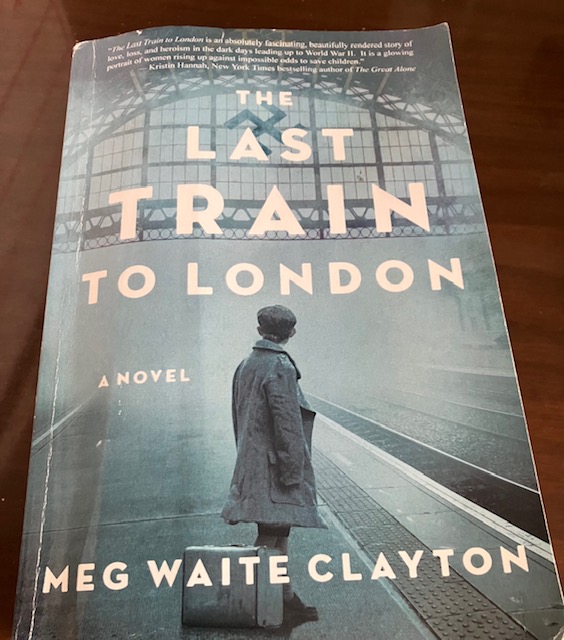
This is a fictionalized story based on the very real kindertransport trains and ferries taking Jewish children out of Nazi Europe. The real woman who convinced Eichmann to allow the first 600 children to be transported to London, when England agreed to provide visas for them, was named Geertruida Wijsmuller. She saved a large number of Jewish children’s lives, first by taking two and three, and sometimes as many as ten, out of Germany and into the Netherlands. She started doing this in the mid-1930s. The situation became more urgent after Hitler invaded Austria. Many countries closed their borders and refused to allow Jewish people entry visas. Tante Truus, as she had the children call her, worked with some highly placed people in England to pressure their parliament to allow children to be evacuated and held in two summer camps until foster families could take them in. After the war, she was granted Righteous Among the Nations status.
The story in this book centers on two families. One a wealthy Jewish chocolatier who has a wife suffering from cancer. They have two sons, Stephan and Walter. The other, a barber, a Christian grandfather who has a widowed daughter-in-law with two daughters. One is Zofie-Helene and the other Johanna. Their mother is a journalist who is very outspoken against the Nazis.
The story starts with both families living their normal lives and Zofie and Stephan becoming close friends. She’s mathematically gifted and he’s interested in being a playwright.
The chapters alternate between their stories and the story of Tante Truus and her rescues of small groups of children and the dangers she faces in that endeavor.
With Truus in the Netherlands and the others in Vienna, I wondered in the early parts of the book how she was going to help them being as they are quite a ways apart.
When Germany annexes Austria with not so much as a shot fired and seemingly overnight, Stephan’s family’s life undergoes a massive change. His father is taken to a camp and he goes into hiding as he is of an age where the Nazis want to inter him in a camp as well. His brother is only five and, at this time, they were not taking children that young to the camps.
Zofie’s mother, a Christian, eventually gets taken by the Nazis due to her unwelcome stories pointing out their conduct which she won’t stop writing even though she is pressured to do so. The two girls are left with their grandfather.
The story unfolded at a good pace. Some of the parts were very hard to read. The author depicted the utterly senseless cruelty of the Nazis and their adherents very well. It always amazes me how terribly awful these people could be to other people. And how the population turned on people who had been their friends and fellow citizens just days prior.
The author also did a good job showing the fear and terror of the ordinary citizen and why so many didn’t speak up to try to stop the atrocities they witnessed. A great part of the population was cowed and if they spoke up, they would be punished severely as well. Some of them tortured and murdered merely for voicing an opinion—or for nothing at all, even an imagined slight.
It was a harrowing read but one I recommend for several reasons. One, the story of the main characters in Vienna seems to be a reflection of what a lot of families went through during this time. Two, the story of Geertruida Wijsmuller is a story of how one person can make a massive difference in the lives of so many. One voice, one brave soul, she saved so many and gave them a chance at life and that is amazing. And third, with the seeming resurgence of some of the awful ideas the Nazi’s had, this is an important read. We must never, ever, let these things happen again and the author of this book makes what happened to Jewish people, as well as anyone who disagreed with the Nazi ideals in that time, all very real and relatable with the characters she created.
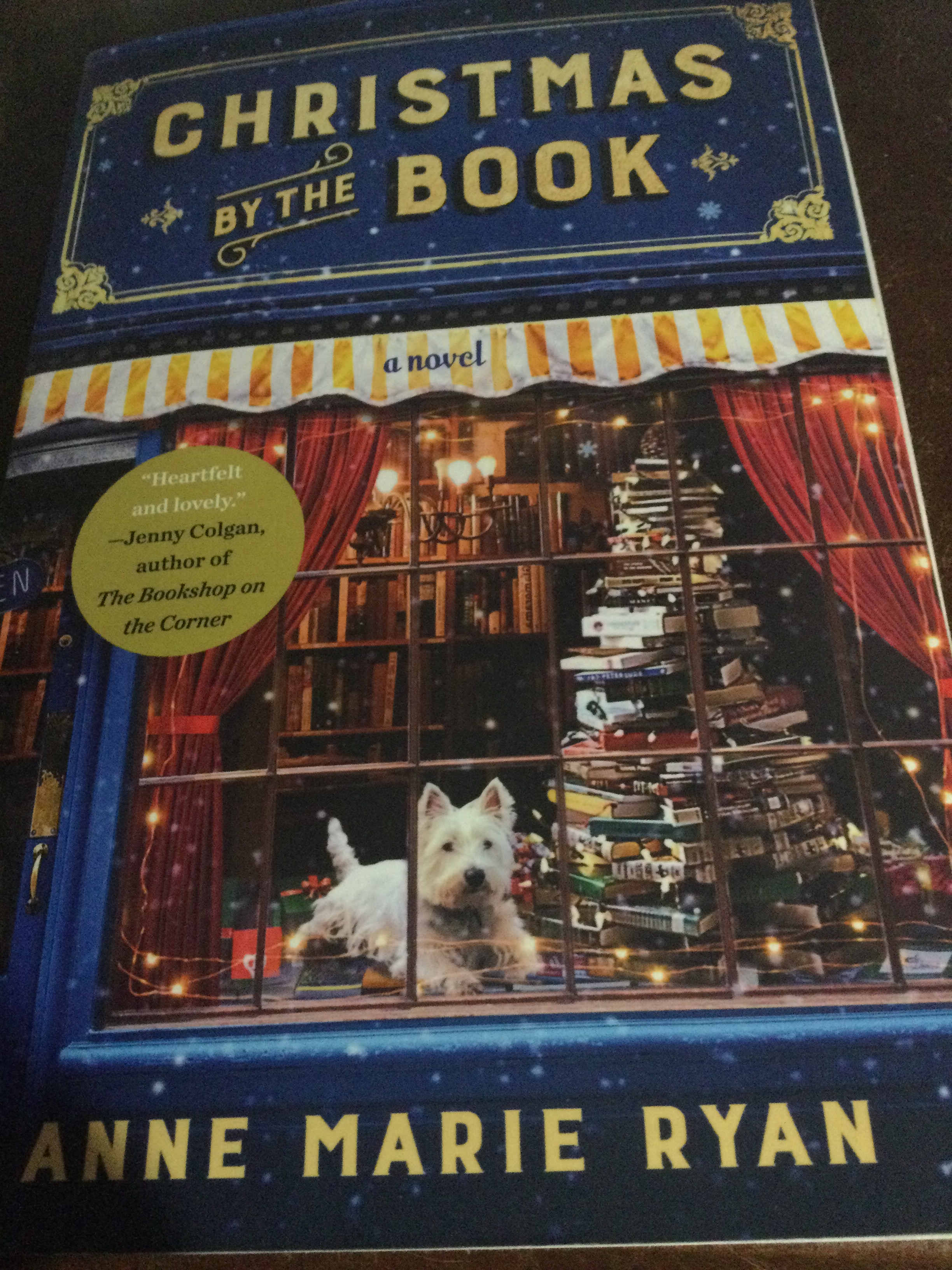
I was attracted to this book by the blurb and, ultimately, it didn’t disappoint. It did take me a while to get into, though. The first chapters introduced a lot of characters in a short period of time. I’m someone who has a hard time with names in real life so it’s better for my reading enjoyment to be introduced with a cast of characters in a more drawn out process. I had to keep going back a few pages to recall who was who.
Once everyone was established in my head, though, things got better and I enjoyed the story more.
The protagonist’s mother founded a book shop in a small English village when the protagonist was young. The bookstore with the flat on the second floor is the only home she’s known for her whole life. She didn’t have a father in her life as she grew up.
The heroine’s husband was raised by a wealthy family in London and he’s always been a disappointment to his father as he chose to marry the heroine and help run the bookshop and not run the family business.
The husband had a heart attack a few months prior to the events in the book and the heroine has been babying him and keeping secrets from him about the health of the revenues of the business. They have one child who is on her gap year.
They bought a copy of the book that covers the Christmas Day soccer game between the Allies and Germany in WWI when they were very newly married. It has never sold. Until the day a man comes in looking for that very volume for his grandson who has leukemia.
This action plants the idea for them to give away six books to people in their area. They ask on Twitter for people to nominate a deserving recipient.
They choose books and wrap them.
When the six people are chosen, the wife randomly addresses the books without knowing which will go to whom.
The reminder of the book is introducing us to the people chosen and the impact on their lives of the book they were randomly gifted as well as how the heroine and her husband deal with the pending sale and closure of the store since they owe massive taxes.
The one issue I had with the book was the secret keeping the wife did. The store got in deep financial trouble over a period of many months and she didn’t tell her husband. That bothered me. A lot. They seemed to have this perfect marriage which I thought made it completely unforgivable that she would keep such a big secret. That they were going to lose their home and livelihood based on her failure to be a good steward to the business and lying about it. It was a massive problem for me. And he forgave her way too easily.
The story itself, other than the lying to the spouse, was lovely and shows the power of the written word. How it can make a difference in a life. It was a worthwhile story as well as entertaining. A warm, fuzzy, Christmas read with life lessons for all six recipients as well as the bookshop owners.
This was another book I read quickly like the last one I reviewed. The main character’s (Thea) life implodes when she loses her job in the same week she finds out her husband has been having an affair with one of her friends. As she’s in the process of moving out of the home she’s lived in with him for fifteen years, she receives a letter from a lawyer in Scotland informing her that she has inherited her great-uncle’s house and contents along with a sum of money.
Taking this chance to leave Sussex where the shattered pieces of her life are causing her to continue to grieve and work herself into a stupor of not moving from her bed, she and her best friend decide to head to Scotland for two weeks to check out the house she inherited.
They arrive and find the cottage to be charming and filled with antique books, many first editions. She thinks she should sell some of them.
Thea gets the name of the owner of the local antiquarian bookstore who is the brother of the local lord. The store owner is the elder of the two but relinquished the title. The brothers are sworn enemies.
As the book moves along, Thea finds that she likes both brothers as people. The bookstore owner is a bit of a curmudgeon, but she finds ways to make him laugh. The lord is unfailingly polite and, even though he’d like to buy the cottage from her, he’s cordial and even invites her to a party at his home.
When it’s time for her friend to return home, Thea decides to stay a bit longer and takes a job in the bookstore when the young man who works there leaves for university.
The story is excellent. It felt like I knew this woman and the brothers. They were so realistically drawn and fully fleshed out. They all seemed like someone I’d like to have a drink or meal with. Like they could be my friends.
The banter between Thea and the bookstore owner was fun. Both were witty and smart. Once in a while, some of their dialogue was a bit too much, but overall, I really liked their scenes. Thea was a clever lady, but sometimes she spoke in a stream of consciousness way that made me wonder about her. LOL
Thea learns and grows over the course of the book. She becomes stronger and has more insight into herself.
The bookstore owner brother has a journey of his own and Thea is the catalyst for that growth. Even the lord brother has a mini character arc which was nicely done.
Rumor has it the Rigby Mansion is haunted. The last owner was brutally murdered and now the house is on the market.Dr. Max Edison, a surgeon who has no time for such nonsense, wants to tour the manor as he wants a home outside the city. The firm listing the property sends him out with their newest employee, Stella McNamara, who is convinced the rumors are true. She has a sixth sense about these things….
This story was part of a group of stories with common elements by a group of writers. We had to have a character named Max and lost keys among other items.
This was a quick read that was enjoyable. I found it interesting that the main character was inspired by a real person. I knew the family who owned the Magnolia Palace were real –The Frick family. Mr. Henry Clay Frick was an industrialist as well as an art patron and eventually, he left his home to the city to make into a museum. Audrey Munson was the woman who inspired the heroine, Lillian, in this story. Audrey was used by many sculptors of that era as a model for many of the statues around the city of New York. Many call her the first super model.
The novel begins with Lillian being in the wrong place at the wrong time and she is questioned in the murder of her landlord’s wife. She flees and ends up in a job interview to be the assistant to Mr. Frick’s daughter.
The action swings back and forth from the gilded age to the 1960s where we meet a model named Veronica who has come over from England to be part of a photo shoot at the Frick mansion which is now a museum. She meets a young man who is interning at the museum. They accidently get locked into the museum overnight in a snowstorm and blackout.
Back in the gilded age, Lillian works for the daughter of the industrialist and tries to help her in her love life as the woman’s father wants her to marry. There’s a lot of interesting psychological undertones in Frick’s son and daughter’s interactions with him as well as each other.
Lillian finds herself falling for the young man who has been chosen to be her employer’s fiancé and he falls for her as well. The daughter goes out of town with her family and sets a kind of treasure hunt around the house for her intended husband in order to amuse him while she’s gone. Lillian helps him in the quest and they draw closer together.
In the 1960s, Veronica finds the clues for the treasure hunt in the house/museum and she, along with the intern start to follow them while they are stranded in the house.
The rest of the story continues to move back and forth between the time periods and the two heroines. A murder occurs and the excitement builds in each era. I won’t say much more as I don’t want to give away any spoilers, but it’s a unique and interesting story. I thoroughly enjoyed it and recommend it if you like art, the gilded age, the 1960s, mysteries and a fictionalized look at the past in an exciting way.
Issues of racism and prejudice against women with ambition are two of the themes of this story as well as family love and conflict. Overall, I think it’s a good story.
My friend, Iris, has a new release this week: AMAZON LINK
The discovery of her mother’s diaries unravels a secret which sends Lani on a journey to New Zealand …
She lost her mother in an accident. Now, Lani Dekker is determined to meet the man who, according to her mother’s diaries, is her father. He’s not what she expected, a bit on the extravagant side, but she soon warms up to him, thanks no less to Dylan, her father’s neighbour. Despite her attraction to Dylan, she can’t figure out whether he’s a friend or foe.
Dylan Harper is merely going through the daily motions after his wife died in a ski crash. That is, until his life is turned upside down by the arrival of his neighbour’s daughter. Their attraction is instant, even more so when they wake up in the same bed after an earthquake. However, it’s her accusation that his interest in her involves her father’s money rather than their mutual magnetism that derails their newfound bond.
Will finding the truth about her parents be a chance for Lani and Dylan to overcome their differences?
Three very different women with something in common.
One a wife and mother, one a career girl and one a recent graduate of Cambridge University. They all work at the bookstore and share common issues even though that’s not readily apparent at the beginning of the story.
The author takes us on three distinct yet interwoven journeys with these women. Real literary figures appear in the tale and interact with the fictional characters which gives the setting, as well as the prose, a realism that was well done.
The social issues at play here are the end of WWII return of the men from fighting and how that affected the workforce that had been relying on women while the men were gone, the societal expectations of wives and mothers, privilege in society and how that affects behavior, and racism. The author gave us a compelling story for each of the women while weaving in these issues in a finely crafted way.
The path each of the three protagonists took and where they ended up was obvious pretty early on to this reader, but the journey of each was fulfilling and interesting.
Overall, I liked the story and the way the author interwove the various narratives. The setting was perfect as it moved the plot along at a nice pace and contributed to the issues facing the main characters. The bookstore was a little microcosm of society contained in four walls. The time period chosen for the story emphasized the issues as well. Sadly, some of the themes covered in the book are still problematic to this day. Some things seem slow to change in society and this book shows that in many ways.
An enjoyable, thought provoking read that was entertaining as well. Not at all preachy, but the author has a lot to say.






 Ramblings of a Writer